Samsung Ice Maker Not Dumping Ice: How to Fix It
If your samsung ice maker not dumping ice, you’re probably watching cubes form in the tray while nothing comes out into the bin or dispenser. That “it makes ice but won’t release it” problem usually points to a harvest/eject issue—often jammed ice, frost buildup, or a failing motor/gear cycle. Use the checks and fixes below in order so you can get back to steady, reliable ice.
For more help, see our Samsung Ice Maker Not Working: Diagnose and Fix No-Ice Problems guide.
Why the Ice Maker Makes Ice but Won’t Release It
How the dump cycle is supposed to work
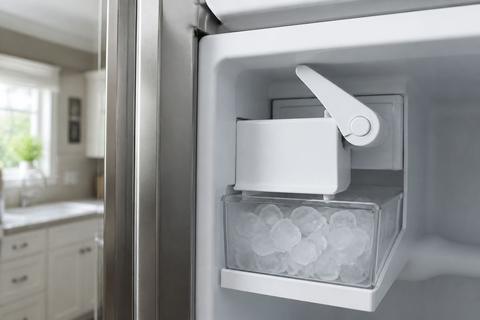
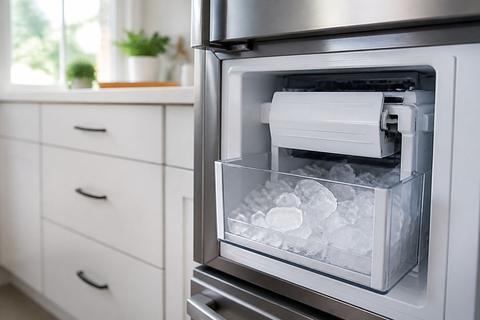
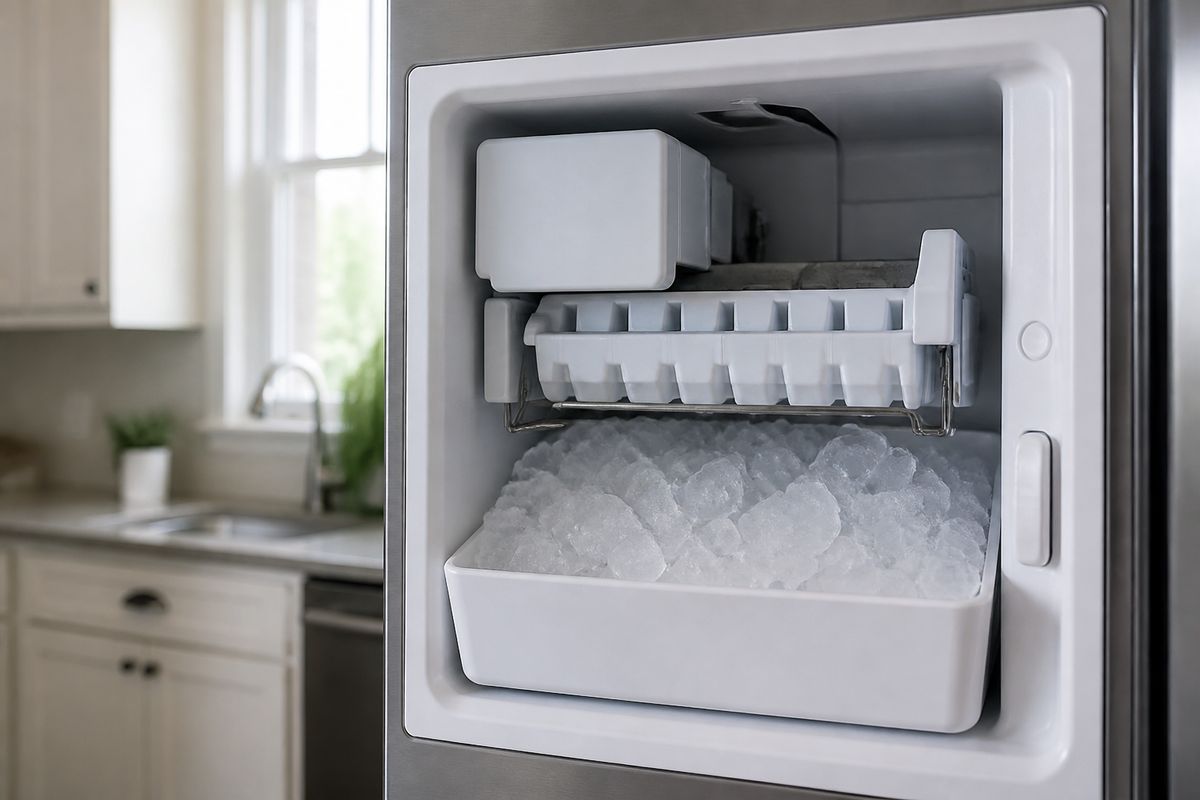
During normal operation, Samsung ice makers freeze water in the mold, then run a timed harvest cycle. The ejector (driven by a motor/gear assembly) pushes the loosened cubes out of the mold and into the bin or chute. At the same time, the mechanism typically trips a shutter/flap so the cubes can drop into the correct path. When ice is stuck in the mold or tray, the harvest cycle completes partially—ice forms, but the ejector can’t move it far enough to dump.
What the clicking or humming usually means
A brief clicking, ticking, or short humming sound can be normal during the harvest sequence as the motor engages and the gears cycle. If you hear repeated clicking with no ice release, the motor and gears are trying to complete the dump cycle but are physically blocked by an ice bridge, heavy frost, or a jam in the ejector path. Loud grinding or a sustained buzzing means the drivetrain is fighting resistance (often ice buildup or a worn motor). Pay attention to whether noise stops after a short time (normal engagement) or continues without dumping (blocked harvest).
Common reasons ice stays stuck in the tray
The most common causes are mechanical and frost-related:
- Ice bridge between cubes that prevents the ejector from pushing them free.
- Frozen cubes stuck in the mold because the freezer is too warm or the harvest cycle is underpowered.
- Frost buildup on the mold, ejector fingers, or sensor area that increases friction.
- Misalignment of the bucket, flap, or ice chute that stops cubes from falling where they’re supposed to.
- Weak motor/gears that can freeze ice but can’t reliably complete the dump cycle.
Quick Checks Before You Open Anything
Make sure the ice bucket is seated correctly
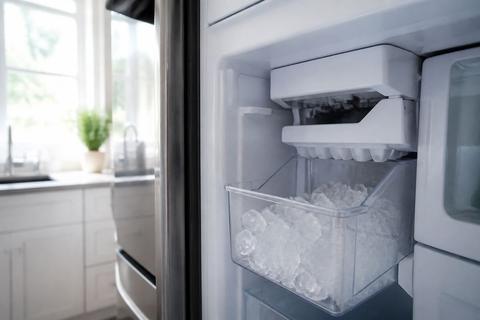
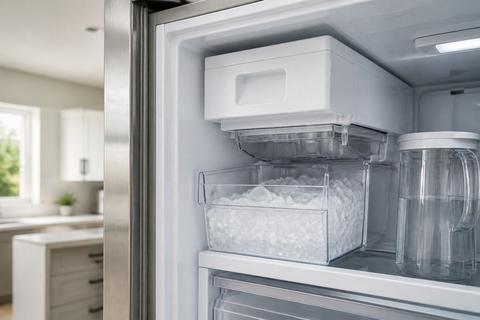
An incorrectly seated ice bucket can stop the ice release path by mispositioning the chute and the dispenser/harvest control points. Remove the bin, inspect the rails and the bucket base, and reseat it firmly until it locks in place. If your model uses a removable internal bucket, also check the chute area for ice that could block the slide path. Once the bucket is properly aligned, the ice maker should be allowed to complete a harvest and drop cubes without obstruction.
Check for a jammed ice bridge or frozen cubes
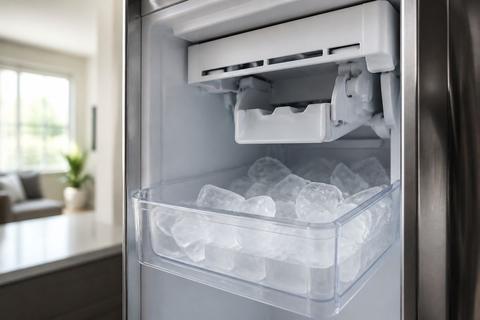
Look at the ice bin and the visible tray/mold area (through the front opening if accessible). If you see a solid mass of cubes connected together, that’s typically an ice bridge. Break up only what you can reach safely, then remove loose fragments so they can’t re-freeze into a bigger blockage. If cubes are frozen solid inside the mold area, you’ll need to clear the ejector path (covered below) rather than forcing the mechanism. A bridge is the most common “makes ice but won’t dump” reason because it physically prevents the ejector from moving.
Confirm the freezer is cold enough for normal harvest
Ice production depends on freezer temperature. If the freezer runs warm, ice may form but won’t release cleanly during harvest. Set the freezer to 0°F (-18°C) (or the recommended Samsung setting for your model) and allow time for stabilization. Also check that the vents aren’t blocked by food that restricts airflow. If temperature has been off recently—after a door left open or heavy stocking—expect harvest to be impaired until the freezer fully returns to its target range.
Simple Fixes You Can Try at Home
Remove stuck ice and clear the ejector path
- Remove the ice bucket.
- Let any visible loose ice melt enough to clear the chute—use warm water on the exterior surfaces you can safely reach, not boiling water.
- If accessible, clear ice around the ejector fingers and the area where cubes drop. Use a plastic utensil to avoid damaging the mold or sensors.
- If ice is stubborn, run a gentle thaw by using a hair dryer on low at a safe distance to melt frost around the ejector area.
When the path is clear, insert the bucket correctly and let the ice maker run a harvest cycle.
Reset the ice maker the right way
A reset can clear a temporary control glitch that prevents the dump cycle. Do this first before deeper disassembly:
- On many Samsung refrigerators, switch the ice system to Ice Off on the control panel (if your model has this), then wait a minute.
- Remove the ice bucket.
- Clear any visible jam/ice bridge from the mold opening area.
- Turn Ice Off back to Ice On and replace the bucket fully.
On many models, a built-in Test option exists (often a small blue button on the underside/right side of the ice bucket assembly). Press and hold the Test button about 10 seconds until you hear a chime; the unit runs a test harvest so you can confirm the dump mechanism engages.
Power-cycle the refrigerator to clear control glitches
If the reset didn’t solve it, perform a full power cycle to clear control-board lockups:
- Switch the refrigerator off at the wall outlet or turn off the refrigerator breaker.
- Wait 5 minutes to fully discharge the controls.
- Turn power back on.
- Keep the freezer closed while it stabilizes.
After power returns, the ice maker can take roughly 24 hours to refill and start producing normally. Discard the first one or two batches so you’re checking fresh ice from a properly functioning harvest cycle.
Inspect the Parts Most Likely to Fail
Test the ice maker motor and gears for weak movement
If ice freezes but the dump never completes, the drivetrain may be weak. Look and listen during harvest:
- Start a harvest/test cycle (use the Test button if your model has one).
- If you hear clicking but the ejector does not drive fully, the motor/gear set may be unable to overcome the load.
- Check for repeated short cycling (engage → click → stop) without movement.
If you have to clear the jam repeatedly but the motor still won’t complete the eject cycle, the motor/gears are the next likely failure. Continued failure after clearing obstructions and confirming freezer temperature points toward a worn assembly.
Check the dispenser flap, arm, and sensor alignment
In many Samsung units, cubes must travel through a chute that is controlled by a flap/shutter and an arm that senses bucket position or dispense readiness. Misalignment can stop release even when the mold ejects. Inspect:
- The bucket seating and any actuator/arm movement area when you insert the bin.
- The dispenser flap/shutter—look for broken or stuck hinge movement.
- Sensor points near the chute/mold area for ice or frost that blocks the sensor path.
If any flap is stuck open/closed or the arm doesn’t return to its resting position, the ice may never reach the drop area, causing “ice makes, but won’t dump.”
Look for frost buildup around the mold or ejector fingers
Frost buildup increases friction and can trap cubes in place. Inspect the front opening around the mold and the region where ejector fingers move:
- Remove the bucket.
- Look for thick frost on the mold rim, ejector surfaces, and nearby sensor areas.
- If you see heavy frost, run a thaw approach (warm-water clearing for accessible ice, and hair dryer on low for frosting around moving parts).
If your Samsung shows errors like 5E or SE (ice maker sensor fault) and the ice-maker light flashes, that points strongly to frost-clogged sensors or a stuck harvest. A full defrost procedure or a 24–48 hour thaw after power-off often clears the issue before production resumes.
Model-Specific Notes for Samsung French-Door Units
What to know about the RS27T5200SR ice maker
For models like the RS27T5200SR, the most common “not dumping” issues still come down to harvest mechanics: frozen or bridged ice in the mold area, frost that prevents smooth ejector travel, and bucket/chute alignment. Start with the same highest-yield checks: freezer temperature at 0°F (-18°C), bucket seated correctly, and clearing any bridge in the visible mold opening. Because French-door layouts often have multiple ice pathways, mis-seating the bucket can directly affect where cubes drop during harvest.
How dual ice maker layouts can change troubleshooting
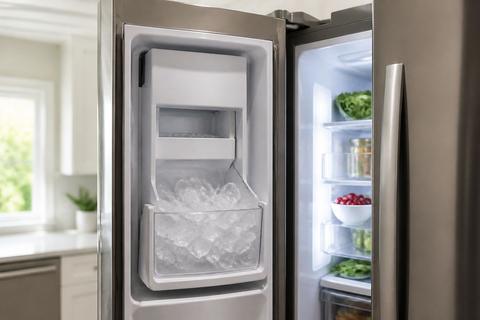
Some Samsung French-door units include dual ice features or multi-stage ice routing (for example, internal ice system plus an external/dispenser-related path). In these cases, ice can be correctly harvested from the mold but still fail to reach the bin due to a blocked chute segment or a control point tied to the second stage. Focus inspection on:
- Bucket placement and chute path cleanliness.
- Any intermediate flap/shutter between the mold and the bin.
- Whether the ice dispenser area is obstructed by frost/ice fragments.
The goal is to trace where the cycle stops: mold release vs. chute drop vs. bin delivery.
When a software or control-board issue is more likely
A software/control issue becomes more likely when:
- You clear jams thoroughly,
- freezer temperature is correct,
- the ice maker attempts harvest (you hear engagement), and
- it still never completes the dump cycle across multiple cycles.
If the unit repeatedly starts but stops mid-harvest without any mechanical blockage, look for fault codes (commonly displayed via the ice/indicator lights). In that scenario, a control-board or software-driven ice logic fault may be preventing the eject step from completing. After repeated mechanical clearing attempts, professional diagnosis is the efficient next step.
When the Problem Is Not the Ice Maker Itself
Water supply issues that create bad harvest cycles
If water delivery is inconsistent, the mold may not fill and release correctly. For Samsung units with a plumbed water line:
- Check that the water shutoff valve is fully open.
- Inspect the supply line for kinks or partial restrictions.
- Replace the water filter if it’s overdue—an old, restricted filter can disrupt proper fill timing.
If the ice maker is freezing small or irregular batches, the harvest cycle can struggle to eject consistently, leading to “ice forms but doesn’t dump” behavior.
Temperature, airflow, and defrost problems in the freezer
Defrost and airflow problems can cause localized freezing/frost where it shouldn’t be, interfering with harvest motion and sensor readings. If the freezer has unusual frost patterns, slow cooling, or inconsistent temperatures, harvest performance will suffer. Check:
- That the freezer isn’t overstocked blocking vents.
- That the door seals are intact and closing fully.
- That defrost cycles aren’t failing (persistent frost is a strong indicator).
When frost behavior is the root issue, fixing only the ice maker often doesn’t hold—harvest fails again as frost builds.
Signs the ice maker assembly should be replaced
Replace the ice maker assembly when you’ve cleared jams, verified 0°F (-18°C) freezer temperature, and still see persistent dump-cycle failure. The strongest indicators include:
- The motor engages but the ejector never completes travel.
- You keep clearing frost/ice but the same stuck failure returns immediately during the next harvest.
- Fault codes (like 5E/SE) persist after thaw and basic resets.
When the assembly fails the harvest step repeatedly with no obstruction, the most reliable fix is replacing the failing component rather than repeating jam-clearing.
How to Prevent the Issue From Coming Back
Keep the freezer at the recommended temperature
Stable temperature is the foundation of clean harvest. Set the freezer to 0°F (-18°C) and avoid frequent warm-door openings. If the freezer runs warm during the day and colder at night, ice can freeze unevenly and stick more easily. Also keep airflow paths clear so the mold area reaches the same temperature as the rest of the compartment. When temperature stays consistent, cubes release more cleanly and dump cycles complete without strain.
Use the right water filter and replace it on schedule
A correct, well-functioning water filter helps maintain proper fill cycles and reduces contaminants that can affect ice characteristics. Replace the filter according to your model’s schedule and keep it properly seated. If you notice slower ice production or ice that looks irregular or partially formed, check the filter first and resolve any water flow restriction. Clean fill supports a harvest cycle that releases more predictably.
Reduce frost buildup with good door seal habits
Frost buildup is the enemy of dump cycles because it traps cubes and interferes with sensors and moving parts. To reduce frost:
- Close the door firmly every time and avoid leaving it ajar.
- Check door seals for wear or gaps.
- Keep heat-producing items out of the freezer area and allow hot foods to cool before storage.
Less moisture ingress means less frost formation, which keeps the ejector path smooth and the harvest cycle reliable.
Frequently Asked Questions
Why is my Samsung ice maker clicking but not dumping ice?
Clicking usually means the motor or gears are trying to start the harvest cycle but can’t complete it. The cause is typically a jammed tray, an ice bridge in the mold area, frost buildup that increases resistance, a weak motor/gears that can’t push ice free, or a control issue that stops the eject step. If the clicking repeats without dumping, clear the ejector path and check for frost around the mold and ejector fingers before assuming the whole unit is fine.
Can I reset a Samsung ice maker that won’t dump ice?
Yes. Many Samsung models allow a reset that clears a temporary control glitch. Start by switching ice to Ice Off, removing the ice bucket, clearing any visible jam/ice bridge, and turning Ice On again. On models with a Test button, press and hold it about 10 seconds until you hear a chime to run a test harvest cycle. If the problem returns immediately after reset, it points to mechanical blockage or frost rather than just a settings/control error.
Why does my Samsung refrigerator ice maker make ice but not release it?
This points to a harvest/eject problem: ice freezes in the mold, but the ejector or motor cannot push it out far enough to dump. Common causes include an ice bridge connecting cubes, frost on the mold rim or ejector fingers, misalignment of the bucket/flap/chute, or a failing motor/gears that can’t overcome the resistance. Start with jam/frost clearing and freezer temperature checks before replacing parts.
Is the noise from my Samsung ice maker normal?
Some brief clicking, short humming, or a short motor sound can be normal during the harvest cycle. Repeated clicking without ice release, grinding, or loud buzzing indicates the mechanism is blocked or wearing out. If the noise persists through multiple harvest attempts with no dumping, clear any visible jam/frost and inspect the ejector path. Continued failure after clearing strongly suggests component wear.
When should I replace the Samsung ice maker assembly?
Replace the assembly if you’ve removed jams, cleared the ejector path, confirmed the freezer is at 0°F (-18°C), and performed a reset/power cycle, yet the unit still cannot complete the dump/harvest cycle. Persistent failure after these steps usually means the motor/gears, ejector mechanism, or control components inside the assembly are failing. If fault codes like 5E/SE continue after thawing and resetting, replacement is often the most practical solution.