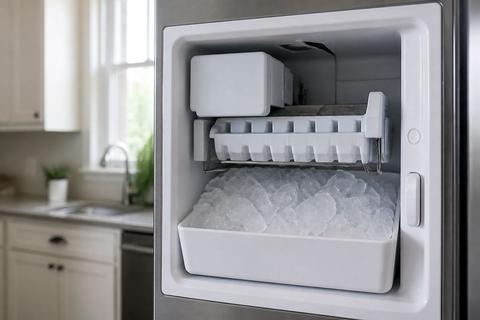
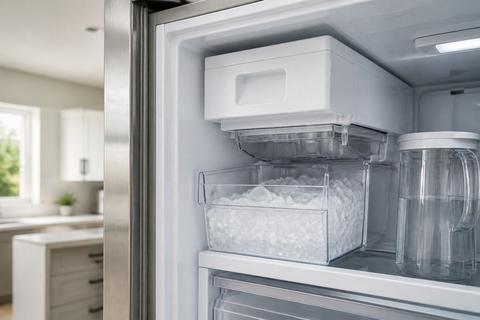
Samsung French Door Ice Maker Not Working: How to Fix It
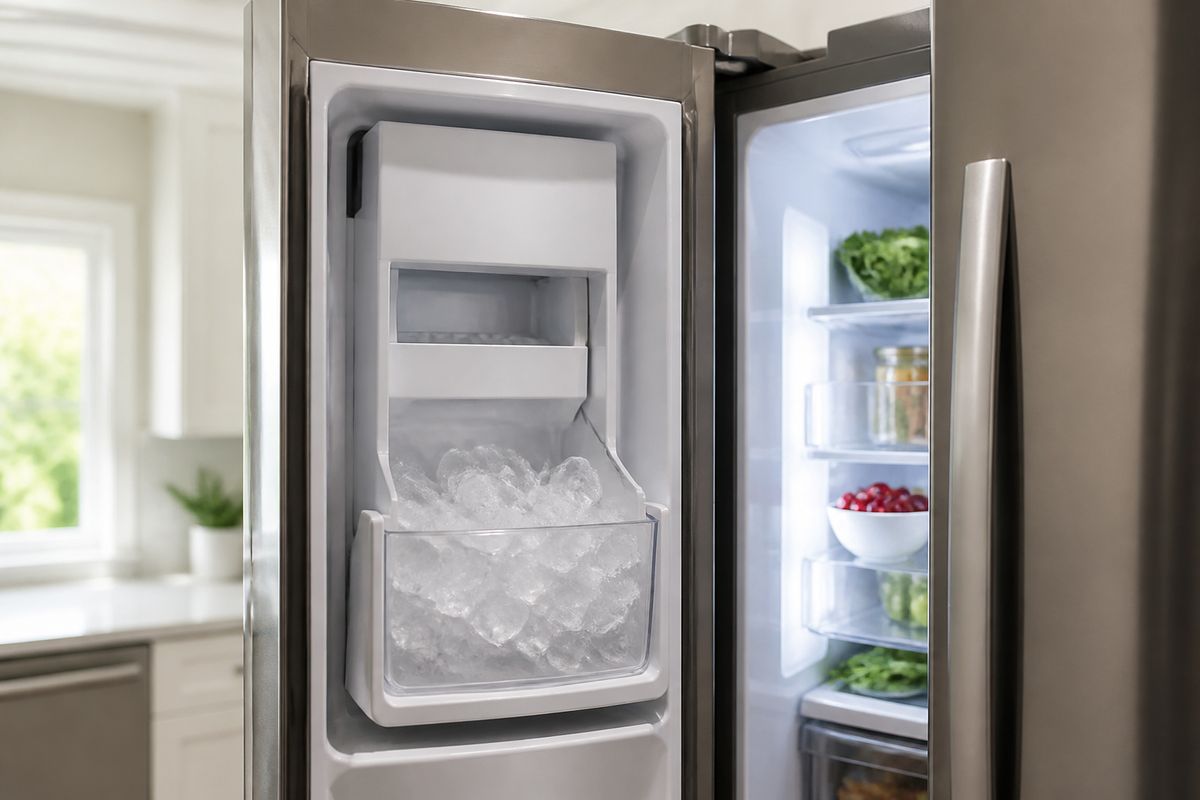
If your samsung french door ice maker not working, you’re probably getting either no ice or only a trickle even though the refrigerator seems to run normally. When the water dispenser works, it’s tempting to assume the ice maker should too—but ice production depends on more than just water coming out of the door. Use the steps below in order to pinpoint the exact failure and get ice flowing again.
For more help, see our Samsung Ice Maker Not Working: Diagnose and Fix No-Ice Problems guide.
Start with the simplest ice maker checks
Confirm the ice maker is turned on
Start here because a disabled ice maker is one of the most common reasons for no ice. On most Samsung French-door models, press Ice Maker / Ice Off on the control panel so the status shows Ice On (or the Ice Off indicator is off). If your model uses a physical switch, confirm it is in the On position.
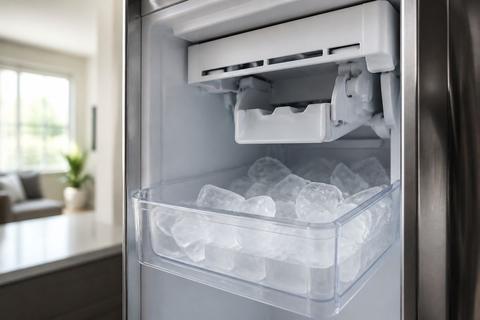
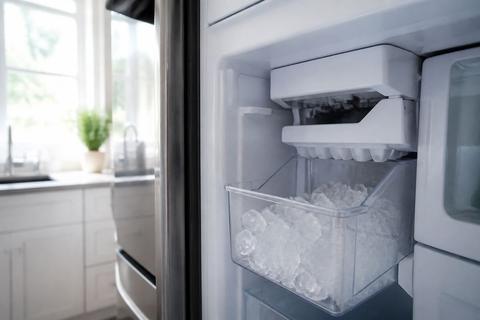
Next, remove the ice bucket and reinstall it fully—improper seating can keep the auger from cycling. If the ice maker has a small blue Test button under or at the side of the bucket area, you can use it later for a direct test cycle after these basic checks.
Check the water supply and shutoff valve
Even if the water dispenser runs, the ice maker fill path can still be starved by a closed valve or restricted line. Locate the refrigerator’s water shutoff valve behind the unit (or under the sink nearby). Make sure it is fully open. Then inspect the water line connection at the refrigerator—push-in fittings can loosen enough to reduce flow.
If your system uses a filter, confirm the filter is seated correctly (not installed backward or loose). After correcting the valve and connection, let the refrigerator attempt a fill for a short period before moving on.
Make sure the freezer is cold enough for ice production
Ice makers need a cold freezer to freeze and harvest properly. Set the freezer compartment to 0°F (-18°C) and the refrigerator compartment to about 37°F (3°C) as a baseline. If the freezer has been left warm or the door has been opened frequently, ice won’t form even if the ice maker tries to fill.
Give the unit time to recover temperature after adjusting settings. Also ensure airflow is not blocked by oversized items or ice accumulating around vents—restricted airflow prevents the freezer from reaching ice-making temperatures.
Inspect the common Samsung-specific failure points
Look for a frozen fill tube or water line
A frozen fill tube is a top cause of “water works, but no ice.” If the ice maker is not receiving enough water, it can sit without producing. Unplugging can help prevent further fill attempts, but you can often clear minor frost without full service.
Remove the ice bucket, then locate the fill tube/connection area behind the bucket assembly. Use a hair dryer on low to warm frost on the chute or around the auger area (keep it low heat and avoid overheating plastic). Once the ice maker can access liquid water again, restart the ice maker and run a test in a later section.
Check for ice buildup in the bucket and auger area
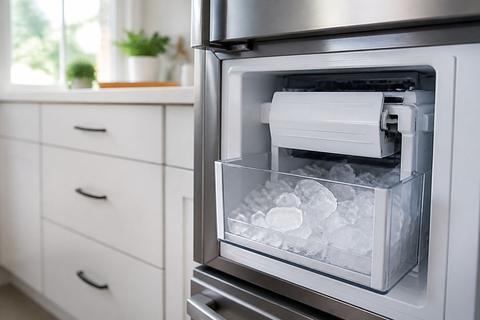
Ice buildup can block the auger from turning or create an ice bridge that stops the harvest cycle. Pull the ice bucket out and inspect both sides: the bucket corners, the underside, and the opening where cubes drop. Remove any visible clumps with warm water and a soft cloth, then dry the area.
If you find compacted ice around the auger drive or chute, do not chip aggressively with metal tools. Use warm water and gentle clearing. Reinstall the bucket firmly so the ice maker detects it and completes harvest.
Verify the door seals and leveling
Weak door seals or an out-of-level refrigerator can contribute to inconsistent freezer temperatures and water/ice issues. Check the freezer door gasket for gaps, folds, or tears. Close the door on a piece of paper and gently pull; it should resist pulling out.
Also confirm the refrigerator is level—an uneven unit can affect how the ice maker’s components cycle and how water settles. Use a level on the top surface and adjust the front leveling feet if needed until the unit is stable and doors close cleanly.
Run a reset and test cycle
Power cycle the refrigerator safely
If the ice maker controller is stuck in a failed state, a safe power cycle can restore operation. First, turn the ice maker Ice Off on the panel (so the unit doesn’t keep attempting to harvest while restarting). Then remove the ice bucket, clear any visible jam, and allow the refrigerator to power down.
For a full reset, unplug the refrigerator or switch it off at the breaker for about 60 seconds, then restore power. Once powered back on, turn Ice On. Let the system run briefly before using the ice maker test button.
Use the ice maker test button or reset method
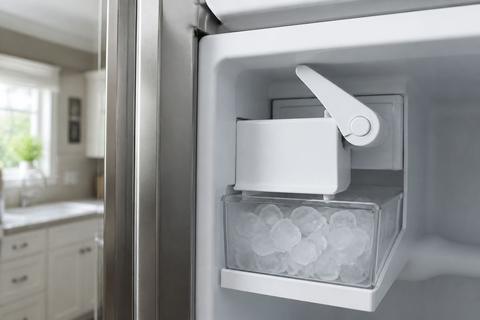
Use the built-in test to force a fill and harvest so you can confirm the ice maker is functioning. On many Samsung models, there is a small blue Test button on the underside or right side of the ice bucket assembly. Press and hold it for about 10 seconds until you hear a chime—then release.
The ice maker should run a test fill/harvest cycle. Observe whether water flows to the ice maker area and whether cubes are released into the bucket. If you get a sensor fault, the test may stop; proceed to water delivery and assembly checks.
Wait long enough for a full harvest cycle
After a reset, filter change, or any repair that affects water flow, ice production doesn’t resume instantly. Allow roughly 24 hours for the ice maker to refill and begin storing ice normally. Discard the first one or two batches if you recently changed a filter or cleared the system—initial cubes can contain air or residual water.
If the ice maker was fully cleared from a freeze, the next fill may still require time for cubes to freeze before harvest. Use this window before concluding the problem is hardware failure.
Troubleshoot water delivery problems
Replace a clogged water filter
A clogged or expired filter restricts the water flow needed to fill the ice maker. If your Samsung uses a water filter, replace it with a compatible OEM filter. Make sure the old filter is removed completely and the new one snaps fully into place.
After installing a new filter, run the refrigerator’s water dispenser to purge air from the lines, then let the ice maker attempt its next cycle. If you have a “filter reset” option on your control panel, reset it so the display doesn’t keep showing filter issues.
Check water pressure to the refrigerator
Low water pressure can prevent the ice maker from filling fast enough to freeze and harvest. Check the refrigerator manual specifications, but a common target is roughly 20–120 psi at the household line. If pressure is low from shared plumbing, a partially blocked line, or a weak valve, the ice maker may fail while the dispenser still trickles.
Inspect the water line for kinks, bends, or crushed sections behind the refrigerator. Reroute to ensure a smooth path and no tight bends. Then observe whether the ice maker harvest cycle begins after the next fill attempt.
Inspect the inlet valve for failure
If water flow is weak or inconsistent to the ice maker fill valve, the refrigerator’s inlet valve may be failing. Signs include water dispenser performance that is normal, but ice maker fills that stall, or repeated sensor/fill errors during test.
Access the inlet valve location behind the refrigerator (varies by model). You’ll typically need a technician or a parts-level inspection to confirm valve operation because it involves checking electrical signals and water flow during the ice maker’s call for water. If you find the valve doesn’t open or flow is minimal, replacing the inlet valve usually resolves ice maker no-fill issues.
When the ice maker itself needs repair or replacement
Identify signs the ice maker assembly has failed
A failed ice maker assembly often shows consistent symptoms: the ice maker does not harvest, cubes never accumulate, the auger won’t move, or the unit repeatedly stops mid-cycle. If you run the test button and water enters but no ice is produced, the issue can be the ice maker module or the harvest mechanism.
Look for a jammed auger, broken heater/thermistor behavior, or a component that never completes the cycle. If ice buildup repeatedly returns right after cleaning, the assembly may not be regulating temperature or timing correctly.
Decide whether a repair kit or full replacement makes sense
Samsung may provide updated parts or repair kits for specific French-door ice maker failures, but not every issue is solved by a kit. If the diagnosis points to a specific component (for example, an updated sensor/thermistor or a known gear/auger issue), a repair kit can be cost-effective.
If multiple components show wear—such as repeated harvest failures plus inconsistent fill—replacement may be the better long-term option. Match the decision to what the test cycle demonstrates: water delivery that works but harvesting that fails points toward ice maker assembly replacement more often.
Know when the control board or sensor may be the real issue
Control and sensor faults can stop ice production even when water and the mechanical parts appear intact. If your Samsung shows an ice maker error (such as 5E or SE), the flashing ice-maker light usually points to a frost-clogged sensor or a stuck harvest condition that needs a defrost and/or sensor replacement.
Clear the condition via forced thaw (covered in resets/defrost via the system’s buttons) and allow time for the ice maker to restart. If the error returns after a full thaw and correct water delivery, the sensor or control board may be the true cause and require service-level inspection.
Prevent the problem from coming back
Keep the freezer temperature stable
Stable freezer temperature is the best defense against frozen lines and harvest failures. Keep the freezer at 0°F (-18°C) and avoid leaving the door open for extended periods. If you notice temperature swings, check airflow obstructions and verify the gasket seals fully.
A consistent temperature prevents the fill tube from freezing and reduces the chance of ice bridges forming around the chute and auger. When the freezer runs too warm, water fills but doesn’t freeze properly, which can also lead to messy, jam-prone ice behavior.
Replace filters on schedule
Water filters protect ice makers by maintaining flow rate. Replace the filter according to your refrigerator’s filter life indicator or recommended schedule. A clogged filter restricts fill time, which can cause incomplete ice formation and repeated failed harvest attempts.
After each filter change, purge the dispenser line to clear air, then allow ice production time to normalize. Keeping the filter fresh prevents both slow fills and inconsistent cubes.
Defrost and clean the ice system regularly
Periodic cleaning prevents buildup that blocks the auger or chute. Every few months, remove the ice bucket, discard old ice, and rinse away residue with warm water. Dry thoroughly before reinstalling.
If your area is humid or you frequently notice frost in the ice maker area, you can run a defrost cycle when needed according to your model’s procedure. For a thawed system to work properly, remove any ice bridge and ensure the chute and sensor areas are clear.
Frequently Asked Questions
Why is my Samsung French door refrigerator not making ice even though water works?
A working water dispenser does not guarantee the ice maker is receiving water or completing its harvest cycle. Common causes include a frozen fill tube or restricted water line, ice buildup blocking the auger, low freezer temperature, a clogged water filter, or a failed inlet valve that supplies water only to the ice maker fill process.
How do I reset a Samsung French door ice maker?
Most models can be reset by turning the ice maker off, power cycling the refrigerator, or using the ice maker test/reset button if your model has one. After resetting, allow several hours for the first batch of ice. On many Samsung models, you can also use the blue Test button under or beside the ice bucket assembly to force a fill/harvest cycle.
Is there a Samsung ice maker repair kit for French door models?
Some Samsung French door models use repair kits or updated replacement parts for common ice maker failures, but not every issue is solved with a kit. In many cases, the best fix depends on whether the problem is ice buildup, water delivery, or a failed ice maker module.
How long should it take for a Samsung ice maker to start making ice again?
After a repair, reset, or filter change, it can take several hours to a full day before the ice maker produces and stores ice normally. If there is still no ice after that, another component may be failing, such as the inlet valve, sensor, or ice maker assembly.