Samsung Ice Maker Water Problems: Leaks, Overfill, and No Water
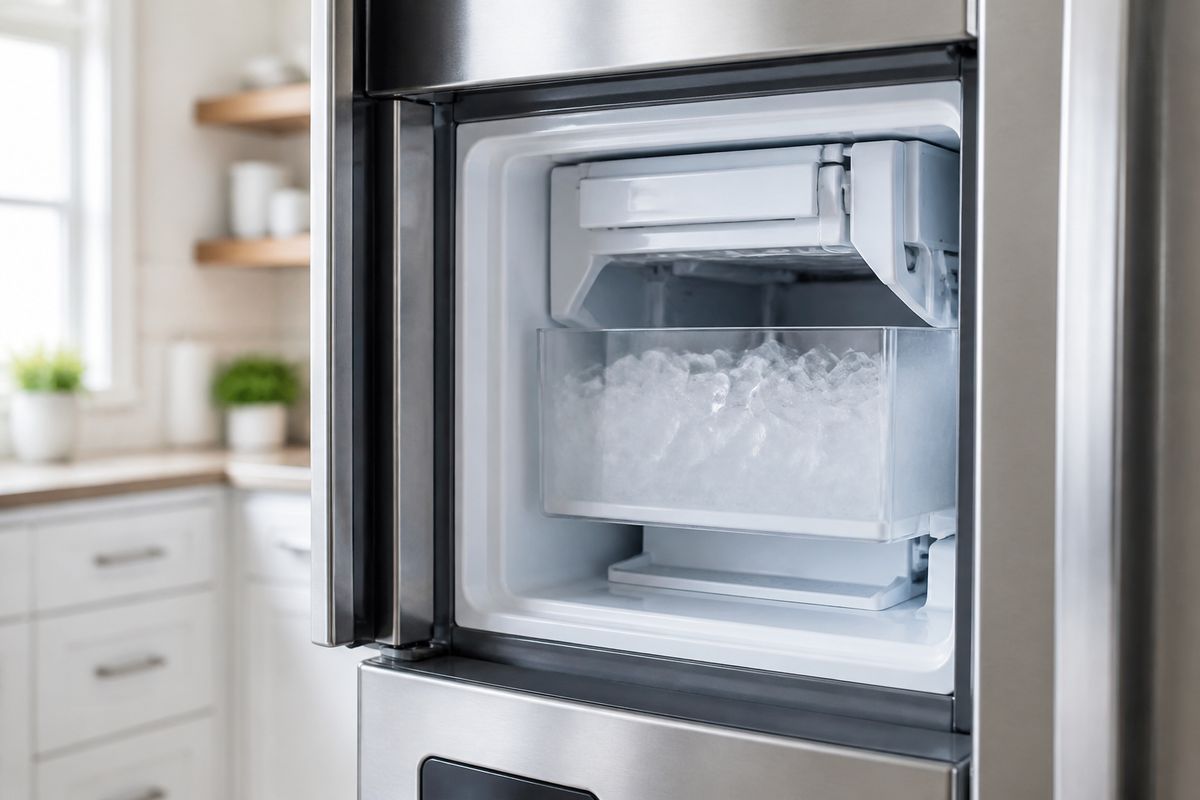
If your Samsung ice maker has started leaking water, making soaked or clumped cubes, or refusing to dispense ice at all, the cause is usually tied to water delivery—not a random “ice maker failure.” Samsung Ice Maker Water Problems: Leaks, Overfill, and No Water all point back to how water is entering, filling, and freezing in the system. Follow the symptom that matches what you’re seeing first, then fix the water path and controls that drive ice production.
Samsung Ice Maker Not Getting Water
When a Samsung ice maker stops receiving water, the issue is often in the supply path rather than the ice maker itself. This problem is usually about restoring steady flow—if water can’t reach the inlet, nothing else matters yet.
Samsung Ice Maker Not Getting Water: Restore Water Flow
- Turn off the ice maker from the refrigerator panel (on many Samsung models, use Ice Off), then remove the ice bucket and check for an ice bridge or jam in the chute.
- Make sure the freezer is cold enough for ice production: set the freezer to 0°F (-18°C) and leave it running until the temperature stabilizes.
- Inspect the water supply connection behind the refrigerator: confirm the line is fully seated at the shutoff valve and the inlet, and look for a kink or pinched section.
- Check the water shutoff valve: open it fully (handle parallel to the pipe) and listen for a change in flow.
- If you recently replaced or haven’t replaced the filter, swap the water filter (a restricted filter can prevent proper fill timing).
- After clearing any obstruction, restart the ice maker and allow up to 24 hours for the unit to refill and produce the next batch; discard the first one or two batches.
Samsung Ice Maker Leaking or Dripping Water
Leaks and drips can come from loose connections, worn parts, or an issue with water delivery timing. The key is pinpointing where the moisture starts, because that location tells you whether the fix is plumbing-side, valve-side, or fill-control-side.
Samsung Ice Maker Leaking or Dripping Water: Find the Cause
- Power the refrigerator down safely: switch Ice Off on the panel, remove the ice bucket, and clear any accessible ice buildup using warm water (no force).
- Check the obvious entry points: look behind the refrigerator and around the water line connections for wetness, mineral deposits, or damp tubing seams.
- Inspect the ice maker area inside the freezer: confirm the water supply hose/tubing is seated and not cracked, and look for water pooling near the fill inlet area.
- If you see evidence of overfill (water around the mold or along the chute), treat it as a fill-timing problem first rather than a “loose connection” issue.
- If the leak appears only during a fill cycle, record what it does (drip timing) and proceed to the dedicated leak source checks for your model.
- Once you’ve corrected the likely cause, run a controlled cycle and watch for the same drip pattern; persistent leaks require the exact leak source to be identified before more use.
Samsung Ice Maker Overfilling or Making Wet Ice
If the ice maker is overfilling, the result is often clumped, wet, or misshapen ice. This usually happens when the water fill amount or fill timing is out of balance, which affects freezing and harvest.
Samsung Ice Maker Overfilling or Making Wet Ice: How to Fix
- Confirm temperature first: the freezer must hold 0°F (-18°C) for solid cubes instead of slush or wet harvest.
- Check the ice maker bucket and assembly: ice that’s blocking proper seating can cause abnormal harvest behavior and improper water release.
- Look for sensor/frost issues: if your model shows an ice-maker related fault (commonly 5E/SE) with a flashing ice-maker indicator, frost-clogged detection or a stuck harvest can lead to incorrect fill behavior.
- Clear frost buildup using a defrost cycle: on many Samsung models, run Forced Defrost by pressing and holding Freezer (or Power Freeze) and Fridge (or Lighting) together for about 8–12 seconds until the panel goes blank and beeps, then press the button(s) until the display reads “Fd” to start defrost.
- Replace an overdue/incorrect filter: a failing filter can disrupt flow characteristics and contribute to inconsistent cube quality.
- After adjustment or defrost, allow up to 24 hours for stable production and discard the first one or two batches to reset the ice cycle baseline.
Full Guide: Samsung Ice Maker Overfilling or Making Wet Ice: How to Fix
How to Change Your Samsung Refrigerator Water Filter
A clogged or overdue water filter can affect ice production, water delivery, and fill consistency. Keeping the filter maintained helps restore proper flow rate, timing, and cube quality.
How to Change Your Samsung Refrigerator Water Filter
- Locate the filter housing (inside the refrigerator compartment or behind the base grille depending on model) and open the filter access area.
- Prepare for drainage: place a towel under the filter and keep a cup ready to catch a small amount of water during removal.
- Remove the old filter by following the housing style:
- If it twists, turn it counterclockwise until it releases.
- If it slides, pull it straight out firmly but gently.
- Install the new filter:
- Match the orientation marks.
- Seat it fully until it clicks or stops against the housing.
- Reset the filter indicator on the refrigerator panel when prompted (many Samsung models require holding Filter Reset or a similar button until the status changes).
- After replacement, run water and let it clear: the ice maker may take around 24 hours to refill and begin producing normal ice; discard the first one or two batches.
Full Guide: How to Change Your Samsung Refrigerator Water Filter
Frequently Asked Questions
Why is my Samsung ice maker not getting water?
The most common causes are in the water supply path: a closed or partially closed shutoff valve, a kinked or disconnected water line, a frozen fill tube, or a clogged water filter restricting flow. Start at the water path before assuming the ice maker itself has failed. Check the freezer temperature, remove the ice bucket to look for any jam/ice bridge, confirm the supply line is connected and unpinched, and open the shutoff valve fully. If water is still not reaching the ice maker, replace an overdue filter and clear any obstructions that block the fill area.
What causes a Samsung ice maker to leak water?
Samsung ice maker leaks usually come from a loose or damaged water connection (tubing or inlet), excess fill that spills into the wrong area, or water rerouting due to ice buildup. The location of the moisture matters: wetness behind the refrigerator and near tubing points to connection/line issues, while pooling inside the freezer around the ice maker points to fill timing or harvest problems. If the leak appears during fill cycles, it’s more likely tied to overfill or a water delivery control issue than a random plumbing leak.
Why is my Samsung ice maker making wet ice?
Wet or clumped ice typically indicates the ice maker is receiving too much water for the freeze time, harvesting before cubes fully freeze, or struggling to maintain the right freezer temperature. Temperature directly affects how quickly water solidifies, and fill amount directly affects cube structure. Filtration also matters because restricted or inconsistent water flow can change how fill cycles behave. If you see symptoms right after a recent filter change or power interruption, allow up to a day for stable refilling and discard early batches.
Can a dirty water filter affect Samsung ice maker performance?
Yes. A clogged or overdue water filter can restrict flow, delay water fill cycles, and cause weak or inconsistent ice production. It can also contribute to poor cube quality, including abnormal wetness or inconsistent harvest behavior. Replacing the filter restore flow rate and helps the ice maker hit correct fill timing. If your ice maker has no water, a restricted filter is a common cause worth addressing before deeper ice-maker diagnostics.