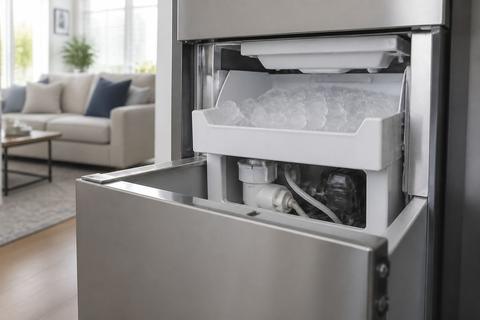
How to Defrost Whirlpool Ice Maker Line and Freezer Safely
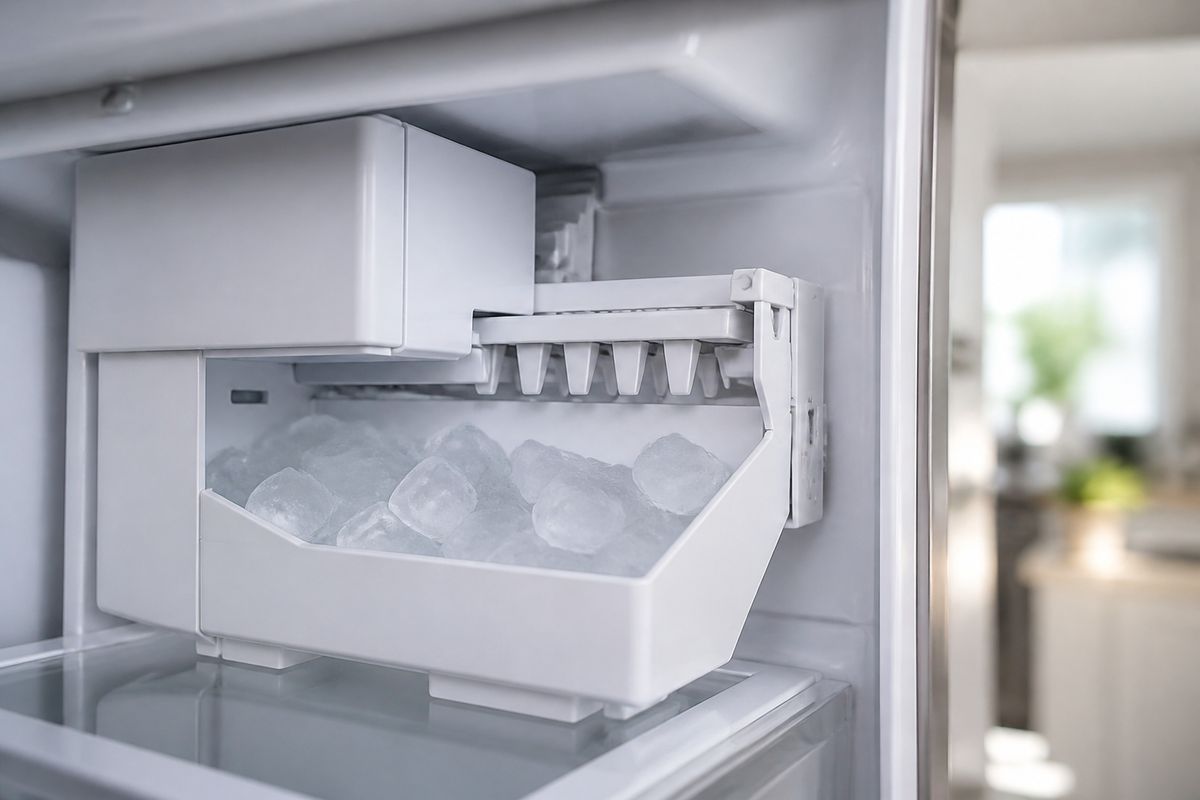
If you’re staring at a Whirlpool fridge or freezer that won’t make ice, frozen water supply lines are a common culprit. Learning how to defrost whirlpool ice maker line safely helps restore water flow without damaging the appliance or creating a mess in your freezer. With the right precautions, you can thaw the line and clear ice buildup efficiently.
For more help, see our Whirlpool Ice Maker Frozen, Leaking, and Clog Repairs guide.
What to Know Before You Start
Identify whether the line is frozen or the ice maker is the problem
Start by confirming where the blockage is happening. Look for signs like no water entering the ice mold, slow/partial ice production, or ice that forms around the fill area but doesn’t harvest. If your ice maker shuts off unexpectedly or the fill tube area looks crusted with frost, a frozen fill line is the likely cause. If the line appears clear but the ice maker still won’t cycle, the issue may be a failed inlet valve, thermostat, or control.
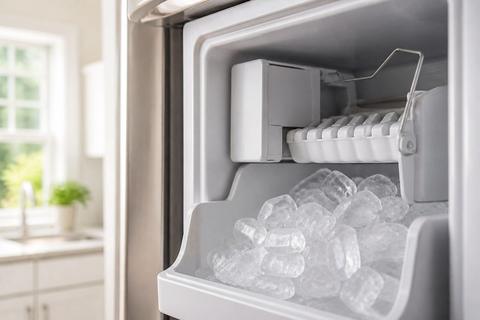
- Check the ice maker shutoff arm/feeler—on many Whirlpool models, raise it to turn ice OFF and lower it to turn ON.
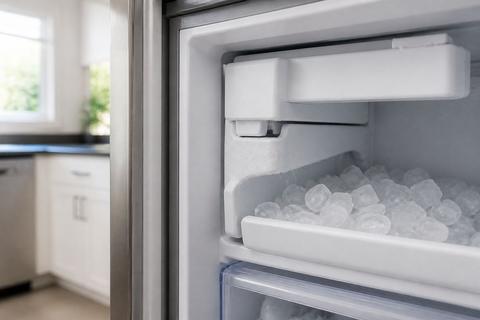
- Look at the fill tube area for frost/ice blockage (the thin tube feeding the ice mold).
Gather safe tools and protect the freezer contents
Before thawing anything, prevent water damage and reduce the risk of electrical issues.
- Unplug the refrigerator/freezer before you touch any internal components near wiring or the ice maker.
- Move food to a cooler to keep it cold while the unit is open and defrosting.
- Set towels on the freezer floor and keep a small bowl/tray to catch thawing water.
Avoid open flames. Don’t use boiling water inside the freezer. Use only gentle heat tools (like low-heat hair dryer) placed at a safe distance.
Check your Whirlpool model’s manual and defrost features
Whirlpool units vary: some have automatic defrost cycles, while others require manual defrosting, especially upright freezers. Locate your model number and confirm any “manual defrost” or “forced defrost” instructions. If your freezer supports an automatic defrost cycle, you can reduce manual work by letting the system run after clearing the ice maker area.
- Find your model number (usually inside the compartment or on the door frame).
- Review the defrost system section for your exact model.
- Note any recommended defrost duration or settings before proceeding.
How to Defrost the Water Line Safely
Unplug the appliance and shut off the water supply
Safety first: you’re dealing with water/ice and potential electrical connections.
- Unplug the refrigerator/freezer from the wall outlet.
- Shut off the household water supply valve feeding the ice maker.
- Keep the freezer door closed as much as possible until you begin thawing to protect food and stabilize temperatures.
If the unit is in a tight spot, pull it out enough to access the water line and power cord safely—don’t yank the line.
Use gentle heat to thaw the line without damage
A frozen ice maker water line thaws best with controlled warmth.
- Use a hair dryer on low heat and keep it moving; hold it several inches away from plastic parts.
- If accessible, warm the section where frost is visible—start at the portion closest to the freezer interior and work outward.
- Stop when you see thawing water begin to move.
Alternatively, you can use warm (not boiling) towels placed near the connection area to soften ice gradually. Never blast heat directly into plastic fittings or wiring.
Clear the inlet, filter, and connection points
Once the line starts thawing, remove the remaining restriction points.
- Check the ice maker inlet area and surrounding connections for ice chunks; clear loose debris so water can flow.
- Inspect the water filter housing (if your model uses an in-line filter) for freeze residue or blockage.
- Re-open the water supply valve after the line is fully thawed and water can move freely.
If you’re seeing recurring freeze at the same connection, focus on the fill tube and ensure the filter and inlet aren’t the real bottleneck.
Defrosting the Ice Maker Area and Freezer
Remove ice buildup around the maker and bin
Ice that builds up around the ice maker blocks the cycle and can trap water.
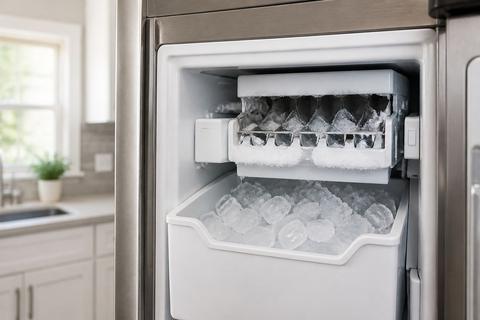
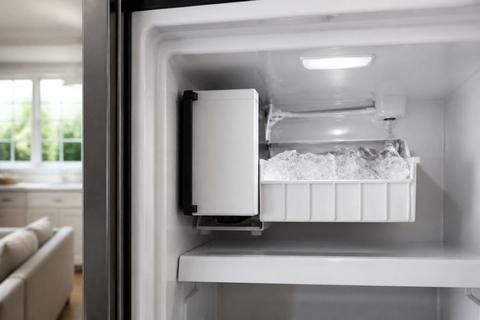
- Remove the ice bin (if your model allows) and discard any loose frost/ice.
- Use towels to absorb meltwater at the base of the ice maker area.
- Gently chip away surface ice only if it’s loose—don’t puncture lines or scrape wiring.
Take care not to bend the ice maker’s shutoff arm or feeler assembly during cleaning.
Use the freezer’s automatic defrost cycle when available
Many Whirlpool freezers have automatic defrost, which reduces the risk of damaging internal parts.
- Put the ice maker in the OFF position (raise the shutoff arm/feeler) to prevent cycles during thawing.
- Allow the unit’s defrost cycle to run. Keep the door closed to prevent temperature spikes.
- After the cycle, wipe standing water and remove any loosened ice.
If frost quickly reappears, the defrost system may need inspection rather than repeated manual thawing.
Manually defrost an upright freezer when frost is heavy
For heavy frost, manual defrost is the most effective approach.
- Turn the freezer OFF and unplug it.
- Leave the door open and place towels around the bottom to catch water.
- Thaw until frost loosens completely; use gentle heat (low-heat hair dryer at a distance) only to speed stubborn areas.
Do not use sharp tools that could puncture panels or damage the evaporator area.
When Frost Keeps Coming Back
Inspect door gaskets, airflow, and temperature settings
Recurring frost typically means warm air is leaking in or the freezer is running too cold.
- Check door gaskets for cracks, warping, or debris; clean and ensure the door seals tightly.
- Verify the freezer temperature is correct for ice production (about 0–5°F).
- Make sure air vents inside the freezer aren’t blocked by food containers.
A poor seal brings in humid air that condenses and freezes at the coldest surfaces.
Look for clogged drains, bad valves, or a blocked fill tube
Ice maker water issues can create localized freezing that repeats after thawing.
- Inspect and clear the freezer drain area if your model has a visible drain channel—clogs cause ice buildup around the interior.
- Check the fill tube for a persistent blockage; thaw it and remove any hardened residue.
- Look at the water inlet valve and water pressure—if water delivery is erratic, ice can form unevenly.
If water pressure is low, the ice maker can’t complete normal fill/harvest cycles cleanly.
Know which defrost parts may need replacement
When you’ve defrosted the line and freezer successfully but frost returns quickly, a failed defrost component is likely.
Common suspects include the defrost heater, defrost thermostat, and the defrost timer/adaptive defrost control board. If the heater doesn’t warm during the cycle, frost never fully melts, and the cycle repeats. If the thermostat is inaccurate, the system can stop too early and leave remaining ice.
Whirlpool Parts That Commonly Affect Defrosting
Defrost heater and thermostat
The defrost heater warms the evaporator during the defrost cycle, while the thermostat controls when heating should start/stop.
- If frost builds up on the evaporator and doesn’t melt during defrost, the defrost heater may be open or weak.
- If the heater runs but frost remains, a faulty defrost thermostat can cut the cycle prematurely or fail to read temperature correctly.
When replacing parts, match the exact Whirlpool part number for your model. Incorrect parts can keep the freezer in a repeated frost cycle.
Defrost timer or adaptive defrost control
Some Whirlpool refrigerators use a timer; others use an adaptive defrost control that decides when to defrost based on compressor/run patterns.
- If the defrost system never initiates, suspect the defrost timer or adaptive control.
- If defrost initiates but is ineffective, test the control’s output to the heater rather than replacing everything at once.
If your unit has an electronic control that tracks defrost performance, follow the manual’s diagnostic steps.
Water inlet valve, fill tube, and ice maker assembly
Even if the freezer defrosts fine, the ice maker can still freeze up due to water delivery problems.
- A restricted or failing water inlet valve can cause intermittent flow that freezes in the line.
- A blocked fill tube (the thin tube feeding water into the ice mold) is one of the most frequent causes of no/partial ice.
- If the ice maker assembly is binding or the shutoff arm is stuck, it can trap water near the mold and lead to buildup.
After clearing a jam or replacing parts, allow about 24 hours for recovery to normal production rate.
How to Prevent Future Freeze-Ups
Keep the freezer at the right temperature
Set temperatures that prevent excessive condensation without starving ice production.
- Set the freezer to about 0–5°F.
- Avoid leaving the door open or loading the freezer with warm items.
- Keep food from blocking vents so cold air circulates evenly.
Consistent temperatures reduce the chance of water freezing in the fill path.
Replace water filters on schedule
A clogged filter restricts water flow and can contribute to freezing and slow ice making.
- Replace the filter on schedule (Whirlpool EveryDrop filters are rated around 6 months / 200 gallons, depending on usage).
- If you recently installed a new filter, discard the first 2–3 full batches of ice due to potential initial small/hollow/off-tasting cubes.
If you notice slow ice, small cubes, or weak dispense, the filter is a prime suspect.
Maintain proper door sealing and storage habits
Humidity entering the freezer quickly turns into frost where temperatures are lowest.
- Clean gasket surfaces and check for proper closure every time.
- Store liquids in sealed containers to reduce moisture load.
- Avoid overpacking—airflow must reach the evaporator area.
If your freezer door is slightly misaligned or the gasket is damaged, frost recurrence is nearly guaranteed.
Frequently Asked Questions
How long does it take to defrost a Whirlpool ice maker line?
A frozen ice maker water line can thaw in 15 to 60 minutes using gentle heat, depending on how much ice is present and where the blockage sits. Severe blockages or fully encased sections can take longer. Always unplug the appliance first and avoid open flames or boiling water inside the freezer.
Can I use a hair dryer to defrost the line?
Yes, you can use a hair dryer if you use low heat and keep the dryer moving. Hold it a safe distance from plastic parts, insulation, and any wiring inside the freezer area. If you see melting water or thaw movement, switch to slower, intermittent warming so you don’t overheat components.
Does a Whirlpool freezer defrost automatically?
Many Whirlpool freezers use an automatic defrost cycle, but the schedule depends on the model and control system. If frost keeps building up even after a completed cycle, the defrost system may be failing (for example: defrost heater, thermostat, or control). Check your model’s manual for how defrost should behave.
What part fails when an upright freezer will not defrost?
Common causes include a failed defrost heater, defrost thermostat, defrost timer, or adaptive defrost control. A blocked drain can also cause frost patterns that look like a defrost failure. Additionally, a bad door seal that lets humid air in can create heavy frost that overwhelms normal cycles.
Why does my ice maker keep freezing up after I defrost it?
Repeated freezing after thawing is usually caused by a clogged fill tube, low water pressure, a leaking or failing inlet valve, or warm humid air entering through a bad door seal or misaligned door. If the issue returns quickly, focus on the fill tube path and water inlet system, not just the visible frost.