Whirlpool Ice Maker Cube Size Adjustment: Water Level Guide
If your Whirlpool ice cubes are coming out smaller than you expect, the fix is often tied to whirlpool ice maker cube size adjustment and the water level feeding the ice mold. When the fill isn’t right, the tray underfills (small cubes) or overfills (sloppy/oversized cubes). The good news: you can correct cube size by controlling how much water enters each cycle—plus eliminate the common reasons the ice maker can’t fill consistently.
For more help, see our Whirlpool Ice Maker Cleaning and Maintenance guide.
How Whirlpool Ice Makers Control Cube Size
What the water level actually changes
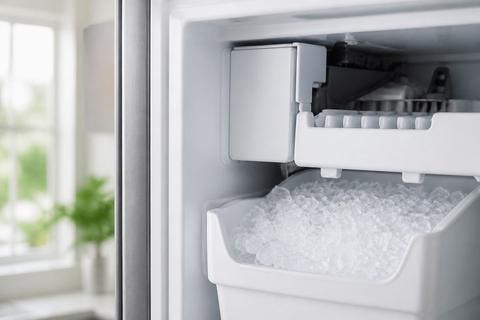
Cube size on Whirlpool ice makers is driven by how much water reaches the ice mold during the fill cycle. More water means the mold fills higher, producing larger cubes (and sometimes overflow or sticking if it’s too much). Less water produces smaller cubes because the mold doesn’t reach the designed volume. The ice maker’s control adjusts the fill behavior by changing the target fill level or fill duration based on the model’s design (sensor-based fill vs. timed fill with a controlled water level).
To get consistent results, you need a stable water supply and correct freezer temperature (about 0–5°F / -18 to -15°C) so each batch freezes evenly at the right rate.
How tray fill time affects cube size
Even when the control is set correctly, the length of the water fill cycle determines how full the tray/mold becomes. A shorter fill cycle underfeeds the mold, which creates smaller cubes. A longer fill cycle overfeeds the mold, creating oversized cubes and increased risk of clumping or overflow into the mold area.
Practical implication: after you adjust the cube size (water level), you must let the unit complete a full production cycle. Many Whirlpool ice makers produce a batch roughly every 90 minutes to 2 hours, so judging cube size after just one “partial” batch can lead you to overcorrect.
Why cube size can vary from batch to batch
Batch-to-batch variation usually comes from changing conditions, not just the settings. Common causes include fluctuating freezer temperature, a partially blocked fill tube, low household water pressure, or a clogged/worn water filter that slows flow late in the cycle. After a power outage, after installing/changing the filter, or after a long shutoff, the first harvest can also be off because the water line and filter are still settling.
Whirlpool recommends discarding the first 2–3 full batches of ice after install, after a long shutoff, or after replacing the water filter, since those initial cubes can be small, hollow, or off-tasting.
Before You Adjust Anything
Confirm your Whirlpool model and ice maker type
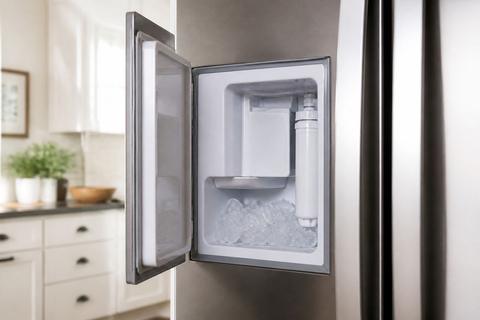
Start by confirming the exact Whirlpool refrigerator model and ice maker style because “cube size” adjustments are not universal. Some Whirlpool models use a user-accessible water fill control (screw/dial/slider), while others rely on an internal sensor or offer no direct user adjustment. Also identify whether you have an in-door dispenser ice maker, an external module, or an inline ice maker—controls and access points differ.
Find the ice maker type from your owner’s manual or by locating the ice maker control area inside the freezer. Don’t force settings or remove the module unless you’re sure you’re working with the correct design for your unit.
Check water pressure, filter condition, and inlet line
Before adjusting cube size, eliminate the supply problems that make the same setting produce different results. Check the water filter: if it’s overdue, flow can drop enough to underfill the mold. Whirlpool EveryDrop filters are rated around 6 months / 200 gallons, and a bad filter can lead to small cubes and poor ice production.
Next check water pressure at the supply line. Whirlpool’s typical spec is roughly 35–120 psi. If pressure is low, increase cube size only after addressing the source. Finally, inspect the inlet line for kinks or restrictions that reduce flow during the fill cycle.
Look for ice jams, frozen fill tubes, or a misleveled unit
A jam or frozen fill tube can stop or partially restrict water delivery, causing small cubes or incomplete batches even with correct settings. The frozen fill tube—the thin tube feeding water into the ice mold—is a frequent cause of no or partial ice. If you suspect freezing, thaw the tube with a hair dryer on low (keep heat away from plastic parts) or warm water, then check the water line and inlet valve for ongoing restriction.
Also look for ice jams in the mold area and ensure the refrigerator is level. A misleveled unit can affect ice drop and cause cubes to stick or overflow.
Step-by-Step Cube Size Adjustment
Find the adjustment screw, dial, or fill control
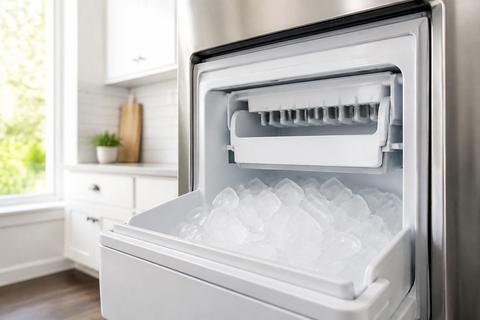
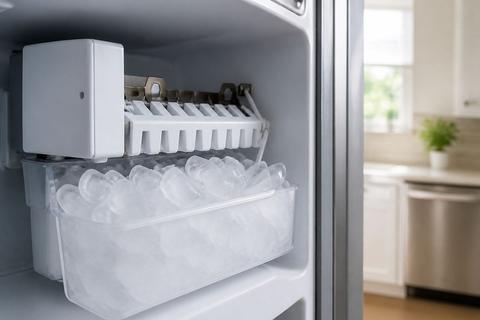
Locate the cube size adjustment control specific to your ice maker. On many Whirlpool refrigerators, the ice maker has a wire feeler/shutoff arm (or a sliding feeler paddle on inline icemakers). If the arm is up, the ice maker is OFF; if it’s down, it’s ON—so cube-size issues start with making sure the unit is actually producing.
Then find the cube-size control, which may be a labeled dial, a screw, or a slider inside the ice maker compartment. Use the manual or markings on the component to identify the direction of change (increase water level vs. decrease).
Increase or decrease the water level gradually
Make one small change at a time. If your cubes are too small, increase the water level one increment. If your cubes are too large or messy, decrease by one increment. Avoid large jumps because ice makers freeze on a cycle and require consistent fill to match the mold volume.
After adjusting, do not immediately judge the next few cubes. Allow the maker to run through a full batch—most Whirlpool units produce batches roughly every 90 minutes to 2 hours—so the new fill behavior has time to stabilize.
Test a batch and compare cube size after 24 hours
Let the refrigerator run normally and evaluate results after a full day, not the next “first batch.” This matters because freezing conditions stabilize over multiple cycles, and minor variations from prior batches smooth out. Look at cube height and how cleanly cubes release from the mold.
If you don’t see improvement after 24 hours, don’t keep cranking the adjustment. Re-check water supply basics (filter, pressure) and inspect for partial blockages like a restricted inlet line or frozen fill tube. If cube size still doesn’t change, the problem is likely a fill/valve/sensor issue rather than a setting.
If Your Ice Cubes Are Too Small or Too Large
Fix weak ice production or underfilled trays
Small cubes almost always trace back to underfilling—often from water supply restriction or low flow during the fill cycle. Start with the simplest causes: replace an overdue water filter and confirm water pressure is in the Whirlpool range (roughly 35–120 psi). Check for a partially blocked inlet line or clogged filter that slows the fill late in the cycle.
Then address the control setting only after supply is good: increase the cube-size/water level by one increment, and allow multiple cycles to reflect the change.
Reduce overflow, sticking, and oversized cubes
Oversized cubes and cubes that stick or form sloppy blocks usually mean too much water is entering the mold or the tray is overfilled. Decrease the water level by one increment and watch for cleaner separation and reduced overflow at the mold.
If cubes clump right after release, also confirm the freezer temperature is correct (about 0–5°F). Warm/freezer swings slow freezing and can make more water freeze unevenly, leading to welded-looking cubes.
Understand when the control is already at its limit
Some Whirlpool ice makers have an adjustment control that reaches an effective maximum or minimum where the water level no longer changes meaningfully. If you’ve already moved the dial/screw to the end stops and cube size still won’t improve, you’re likely dealing with a water inlet/valve flow problem, a sensor issue, or a persistent blockage (like an intermittently frozen fill tube).
At that point, further adjustment can cause jams, leaks, or repeated poor-quality ice instead of fixing cube size.
Troubleshooting Poor-Quality Ice
Separate cubes that freeze together
Cubes that freeze together reduce usable ice and can indicate slow freezing or overfilling. First, confirm cubes are fully formed by checking that the mold area isn’t being overfed. Decrease cube size by one increment if overflow or welded edges are obvious.
Then reduce the causes of slow freezing: make sure the freezer temperature is in range (about 0–5°F), keep the door sealed, and avoid leaving the freezer open. If cubes are already clumped, separate them after they soften slightly at room temperature, then discard badly formed ice that looks hollow or warped.
Improve clarity, shape, and consistency
Clear, consistently shaped cubes indicate stable fill and consistent freezing. Improve consistency by maintaining correct water flow (replace a clogged/overdue filter and verify inlet flow). If you recently replaced the filter or had the ice maker off for a while, discard the first 2–3 full batches after the change. Initial cubes can be smaller, hollow, or irregular.
If the ice shape is inconsistent even with correct cube size settings, focus on the water feed path: inspect for partial blockages and ensure the fill tube isn’t restricted.
When a faulty valve or thermostat is the real problem
If adjusting water level does not change cube size after a full cycle (and supply basics are correct), the issue is often mechanical or electronic. A failing water inlet valve can underfeed the mold even at higher settings, leading to small cubes. A thermostat or temperature-related sensor issue can cause slow freezing, leading to cloudy, soft, or uneven cubes that stick together.
Look for symptoms beyond cube size: inconsistent fill, repeated “no ice” harvests, or water behavior that doesn’t match the control setting. Those are repair-level problems rather than adjustment-only fixes.
Whirlpool vs. Other Ice Maker Adjustments
How Whirlpool settings differ from GE and other brands
Whirlpool cube size control is commonly tied to the water fill level or fill behavior inside the ice maker module, and some models use a direct user adjustment (dial/screw). Other brands may use different mechanisms such as dispense-time adjustments, separate “ice type” controls, or no user-accessible water fill adjustment at all.
Because the control logic differs, using another brand’s adjustment approach on a Whirlpool can lead to overfilling, jams, or unchanged cube sizes. Stick to the Whirlpool owner’s manual method for your exact model.
What to do if your model has no user adjustment
Some Whirlpool ice makers provide no direct cube-size adjustment for the user. In that case, changing the water level is not something you can reliably tune from outside the unit. Instead, focus on the drivers that control how the mold fills: water filter condition, water pressure, inlet line restrictions, and any frozen or partially blocked fill tube.
If those checks don’t correct cube size, the likely causes are internal components—such as the inlet valve or an internal sensor—requiring service.
When to stop adjusting and schedule service
Stop adjusting once you’ve corrected supply basics and the cube size still doesn’t respond to changes. Signs include: cube size remains identical after 24 hours of new settings, you still get frequent incomplete batches, water never reaches the mold correctly, or you find recurring frozen-fill behavior.
At that point, schedule service because a failing water inlet valve, a sensor/thermostat issue, or an internal jam mechanism can’t be resolved by turning the control.
Frequently Asked Questions
How do I adjust the cube size on my Whirlpool ice maker?
On many Whirlpool models, cube size is affected by the water fill level. Locate the adjustment control (dial/screw/slider) and make small changes rather than large jumps. After each change, let the ice maker run through a full production cycle before judging the results, because the first batch after adjusting can differ from later batches.
If your ice maker has an arm feeler shutoff, confirm the arm is in the ON position; an arm left up will stop ice production entirely, which can look like a cube-size problem but is actually an ON/OFF issue.
Why are my ice cubes too small?
Common causes include low water fill from a restricted supply, low water pressure (roughly 35–120 psi is the common target range), a clogged or overdue water filter, or a partially blocked inlet line. A frozen or partially restricted fill tube can also underfeed the mold during harvest.
Check the water supply first—especially the filter—before increasing the cube size adjustment. If cube size doesn’t improve after fixing flow, the inlet valve or an internal sensor may be failing.
Why are my ice cubes oversized or stuck together?
Oversized cubes usually mean too much water is entering the tray, which can happen when the water level adjustment is too high. Sticking or welded cubes can also happen when freezing is slow, such as from a warm freezer temperature or uneven freezing conditions.
Reduce overflow by lowering the water level by one increment, then restore stable freezer temperature around 0–5°F so the mold freezes properly each cycle.
Can I make Whirlpool ice cubes larger without damaging the maker?
Yes—if your model supports water fill level adjustment. Make changes in small increments and avoid overfilling. If your model has no user control for cube size, forcing extra water is not recommended because it can cause jams in the mold area and increase leak risk.
When in doubt, correct water supply flow issues (filter, inlet line, pressure) first before attempting any water-level changes.
What if adjusting the water level does not help?
If cube size does not change after a full cycle and you’ve addressed basic supply conditions, the issue is likely not the setting. A failing water inlet valve can reduce fill flow, and a clogged filter can still be restricting flow even when changed if the issue isn’t resolved. Low pressure or a sensor/thermostat problem can also prevent normal freezing and lead to inconsistent cube size.
Those conditions are typically repair issues rather than adjustment issues, so schedule service if the behavior doesn’t change after 24 hours.