GE Ice Maker Making Noise: Squeaking, Squealing Fixes
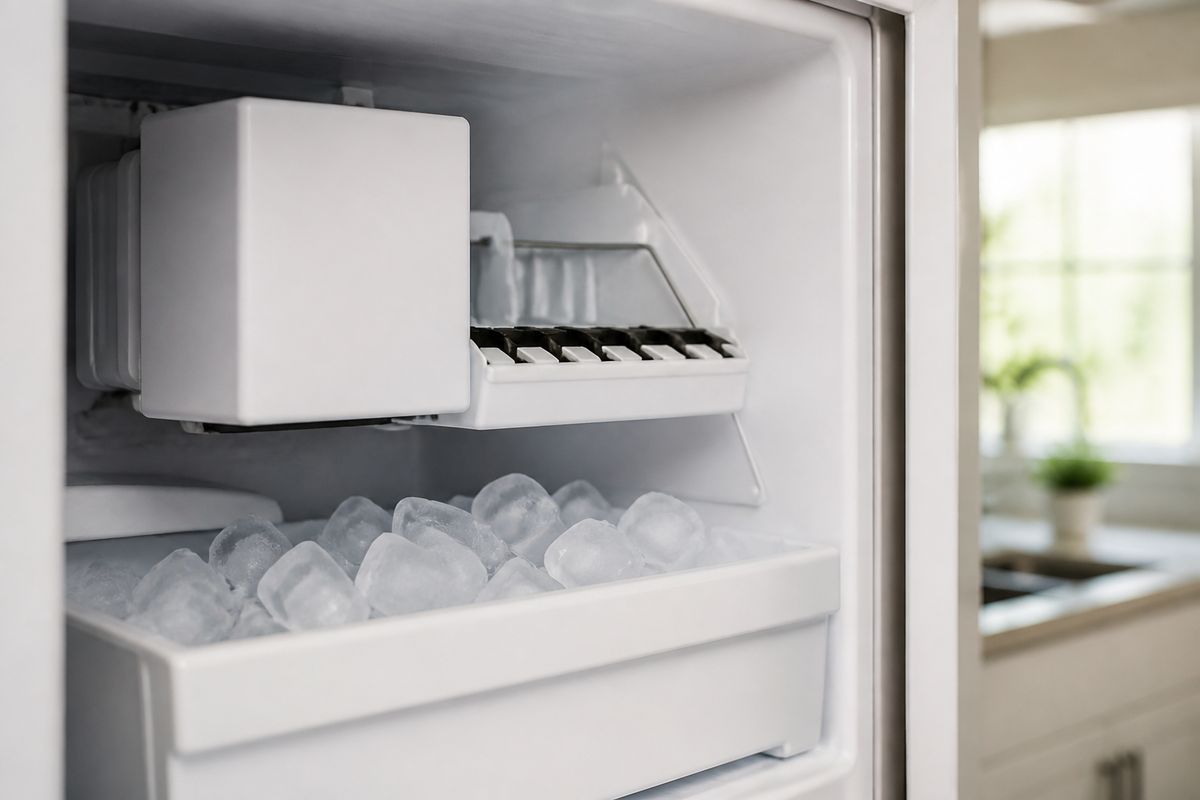
If your GE ice maker is making noise, you’re probably hearing the ejector grind, a high squeal during water fill, or a constant buzzing that won’t let up. Those sounds can be harmless cycling—or a sign that ice or water isn’t moving the way the unit needs. Use the checks below to pinpoint what’s wrong and stop the noise before it damages parts.
For more help, see our GE Ice Maker Defrost and Freeze-Up Fixes guide.
What the noise usually means
Differentiate normal cycling from a problem
GE ice makers do make sounds: you may hear brief humming while the compressor runs, a water-fill sound, and short cycling noises as ice is harvested and the bin refills. A problem is more likely when the noise is sharp (squeaking/squealing), prolonged (lasting through multiple cycles), or gets louder over time. Pay attention to when it happens:
- During fill (water entering) points to the inlet valve or restricted water flow.
- During harvest/eject points to the ejector mechanism, auger/gears, or ice contact.
- When idle suggests vibration, loose mounting, or a fan rubbing issue.
Identify squeaking, squealing, buzzing, and grinding
Squeaking and squealing are usually friction sounds—moving parts dry out, misalign, or contact frost/ice debris. Buzzing often points to a motor or a component trying to run against resistance (for example, frozen line, jammed ice path, or a clogged water path). Grinding is a stronger indicator of mechanical interference in the harvest/eject system or gears.
- Squeak/squeal: friction at the ejector or fan area, or valve chatter from low flow.
- Buzzing: motor/gear struggling or water inlet oscillating.
- Grinding: auger/gears or ejector contacting ice or failing bearings.
When the noise points to a failing part
If the same harsh noise returns every cycle and ice production is poor, the likely cause is a failing component rather than a one-time obstruction. Common fail points include the water inlet valve (chatter plus squeal during fill), the ejector/auger motor (buzzing or grinding during harvest), and the gear train (harsh grinding paired with slow or incomplete harvest). Another failure indicator is noise paired with abnormal behavior: ice that’s smaller than normal, inconsistent fill, or the unit stopping mid-cycle. When you observe those patterns, move from cleaning/adjustments to targeted part inspection.
Quick checks before opening the ice maker
Confirm the ice maker is level and secure
A slightly off-level ice maker can shift vibration into the ejector or fan area, producing squeaks, rattles, and buzzing. Start with a simple physical check:
- Pull the ice bin out carefully, then use a bubble level on the freezer shelf area where the unit sits.
- Make sure the bin is seated properly and the ice maker cover and mounting screws are snug.
- Gently shake the surrounding trim/panels—if something rattles, tighten the loose fastener and re-seat the bin.
After reseating and leveling, run a harvest cycle and listen specifically during eject to see if the noise changes.
Look for ice buildup or a stuck bin
Ice buildup can force parts to scrape or jam, creating squealing or grinding during harvest. Also, a stuck or improperly seated bin can prevent normal cycling.
- Remove the bin and inspect the fill opening and underside of the ice maker for clumps.
- Check for ice around the ejector pathway and in the corners where fragments collect.
- If the bin feels stuck, remove ice from the bin rails and reinstall it fully.
Then clear any loose ice chunks. Break up hardened ice only if you can do so safely without damaging plastic surfaces or wires.
Check water supply, valve pressure, and filter condition
Most high-pitched squeal during fill comes from the water inlet valve dealing with restricted flow. Before you open the unit, check the supply path:
- Replace the water filter if it’s older than 6 months or the ice tastes off—use your model’s exact GE filter number (commonly GE XWF, XWFE, or MWF series).
- Verify the water line isn’t kinked behind the refrigerator and that the shutoff valve is fully open.
- Inspect the inlet connection for frost or water staining that suggests restriction or leaking.
After replacing the filter, run a few ice-making/dispense cycles to purge air and restore steady flow.
Common causes of squeaking and squealing
Dry or worn moving parts in the ejector mechanism
Squeaking and squealing during harvest are commonly friction problems in the ejector mechanism: bushings wear, bearings dry out, or ice residue makes contact louder.
- Unplug the refrigerator (or switch off ice maker control if your model has one).
- Inspect the ejector area for ice dust, hardened frost, or broken-off fragments.
- Remove clumps and wipe accessible surfaces so the mechanism can move freely.
If the noise returns with clean, unobstructed movement and you see visible wear (wobbly linkage, rough contact marks), the ejector mechanism or its motor/gear assembly needs repair.
Fan blades or motors rubbing against ice or debris
Some GE models use a fan or airflow system inside the ice maker compartment. When blades collect frost or debris, they rub and produce squeals/buzzes.
- Remove the ice bin and look for visible ice on fan housings, blade edges, or vents.
- Clear loose frost and fragments using a soft cloth and gentle removal—do not chip aggressively at wiring or sensors.
- If accessible, check that the fan spins freely without scraping.
If the fan housing is iced over repeatedly, address the underlying freeze problem (water leaking, airflow issues, or freezer temperature too warm).
Water inlet valve chatter and low water flow
A squeal during fill points directly to the water inlet valve dealing with low pressure or restricted flow. Follow this chain: restricted flow → valve oscillation → high-pitched squeal.
- Replace the water filter if it’s overdue.
- Ensure the household water shutoff is fully open and the line isn’t kinked.
- Check for frozen or partially frozen water lines near the rear wall—frost indicates flow restriction.
After restoring flow, start a harvest cycle and watch whether the squeal disappears during the water fill portion.
Auger, gear, or motor issues in Profile models
GE Profile ice makers can develop noise when the auger/gear train or its drive motor struggles against resistance from frost/ice buildup. A squeal or grinding sound during harvest is the key clue.
- Remove the ice bin and look for ice packed around the auger or in the harvest area.
- Clear debris from the eject path and wipe away ice dust that can increase friction.
- Listen during the harvest portion: if the sound is consistent and harvest is incomplete, the drive assembly (motor/gears/auger coupling) is the likely culprit.
At that point, plan for a parts-based repair rather than repeated cleaning.
How to fix buzzing and vibration noise
Tighten mounting screws and nearby panels
Buzzing and vibration noise often comes from a loose bracket, cover, or mounting point transferring vibration into plastic panels.
- Unplug the refrigerator or switch off the ice maker control.
- Remove the service access cover if needed and tighten any visible loose screws or bracket fasteners.
- Ensure the ice maker cover/panels sit flush—realign tabs and press them evenly.
Then run an ice-making cycle and check whether the buzz is reduced specifically during harvest.
Clear frozen lines, frost, and loose ice fragments
Buzzing can happen when the unit tries to move water/ice through a restricted path—frozen lines and frost buildup are common causes.
- Inspect for frost patterns on water line connections and inside the ice maker area.
- If you find hardened ice on or near the water path, clear it safely using warm air (hair dryer on low, held at a safe distance) rather than force.
- Remove loose ice fragments from the bottom and corners so parts don’t hit debris during eject.
After thawing buildup, allow the unit to dry briefly, then restart ice making.
Replace a clogged water filter or weak supply line
If the unit buzzes as it fills or harvests but ice output is low, the water system is frequently the cause.
- Replace the clogged filter (GE XWF, XWFE, or MWF series depending on your model).
- If your filter housing shows slow drip or poor flow when you fill a cup from the dispenser line, inspect the supply line and shutoff valve.
- Replace a weak supply line if it’s old, kinked, or shows restrictions.
Once flow improves, the inlet valve stops oscillating and the ice maker stops working against resistance.
When to repair or replace a part
Signs the motor, valve, or gears are failing
Replace the troubleshooting phase with targeted repair when you see repeatable symptoms that cleaning can’t solve. Motor/gear failure signs include constant buzzing during harvest, incomplete ice eject, or grinding paired with slow or missing harvests. Water inlet valve failure signs include squealing only during fill plus poor water flow even after a fresh filter and confirmed shutoff valve. If the unit stops mid-cycle, resets frequently, or produces inconsistent ice while the freezer temperature stays correct, the failing part is likely mechanical or electrical.
What DIY homeowners can safely replace
Some fixes are straightforward and safe for DIY homeowners—especially those that restore water flow. Common safe replacements include:
- Water filter (follow your exact GE model filter type and replace on schedule).
- Basic inlet water components only if your model uses a standard, accessible valve and you can confirm compatibility before ordering parts.
- Ice bin seating and accessible ice removal (no prying on wires or sensors).
If you must access internal wiring connectors, remove the drive assembly, or handle auger/gears, rely on a technician unless you’re confident in appliance electrical safety.
When to call GE service or a technician
Call a technician when the noise points to internal mechanical failure (grinding/bearing noise), when you’ve already cleared ice buildup and restored proper water flow, or when the problem keeps returning every cycle. If your unit has a flashing error pattern, a repeated harvest stall, or the fan/motor area is iced over despite proper freezer temperatures, service is the safest route. Technicians can diagnose with internal testing, check motor torque/load, and replace failing assemblies correctly for your exact GE ice maker model.
How to prevent the noise from coming back
Keep the ice maker clean and dry between cycles
Ice dust and residue increase friction and turn normal contact into squeaks and squeals.
- Keep the ice maker compartment free of clumps and loose fragments in the bin area.
- Wipe accessible frost/ice dust during routine cleaning—don’t let it build into hardened blocks.
- After any thawing/clearing, allow surfaces to dry so the next cycle starts without extra friction.
Use proper water pressure and regular filter changes
Stable water flow prevents inlet valve chatter and reduces ice formation issues that can stress gears and ejectors.
- Change the water filter on schedule (typically every 6 months, or sooner if flow drops).
- Keep the shutoff valve fully open and check the line for kinks behind the refrigerator.
- Ensure inlet water temperature and freezer performance allow proper cycling—freezer should be around 0 to 5 degrees F for ice-making to proceed normally.
Defrost and inspect the unit on a maintenance schedule
Frost buildup is a major cause of rubbing noises.
- Defrost the freezer/ice maker area when you notice persistent frost around the ice maker compartment.
- Inspect for water leaks or repeated ice packing in the eject path.
- For GE Opal nugget ice makers, use the Clean cycle; unplug for several minutes to reset, then run cleaning as directed when the unit signals it needs maintenance.
Frequently Asked Questions
Is a GE ice maker supposed to make noise while making ice?
Yes. Some humming, filling sounds, and brief cycling noises are normal. Repeated squeaking, squealing, or loud buzzing usually means a part is rubbing, vibrating, or struggling to move water or ice. If you only hear short, predictable sounds during fill and harvest, it’s typically fine. If the noise continues longer than the cycle requires—or gets louder each time—treat it as a maintenance or repair issue.
Why does my GE ice maker squeal when it fills with water?
A squeal during fill is usually linked to the water inlet valve reacting to restricted water flow. The most common causes are a clogged or overdue water filter, low household water pressure, or a partially frozen/kinked water line. Replacing the filter and checking the shutoff valve and water line for restrictions addresses the majority of fill-time squeals and reduces valve chatter.
What causes a GE Profile ice maker to squeak?
GE Profile ice makers often squeak when moving parts are dry, misaligned, or contacting frost, ice buildup, or debris around the mechanism. If you hear the squeak during harvest, focus on eject/auger contact points and clear ice dust and fragments. If the squeak happens with water filling, check water flow restrictions and the inlet valve response. Keeping the compartment clean prevents recurrence.
Can I keep using the ice maker if it is buzzing loudly?
If the noise is minor and brief, it can be normal cycling. If it is getting louder, constant, or paired with poor ice production, stop using the ice maker and inspect the unit. Continued operation with a buzzing motor or restricted movement can increase wear on gears, bearings, and the drive mechanism.
When should I replace the ice maker instead of repairing it?
Replacement makes sense when the motor, gears, or valve are failing repeatedly, repair costs are high compared to the unit’s age, or the ice maker is producing multiple symptoms at once (for example, fill issues plus harvest grinding). If the same harsh noise returns after parts replacement and proper cleaning, replacing the unit is often the most cost-effective long-term option.