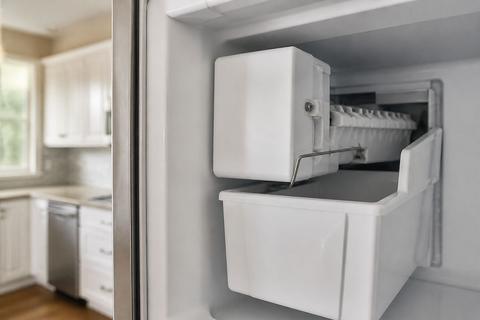
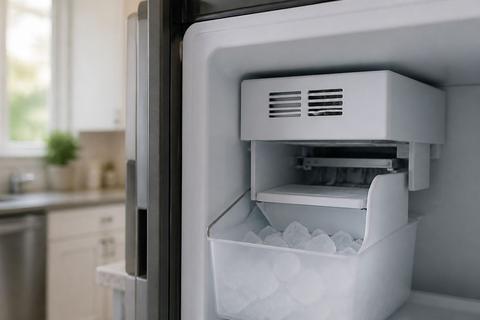
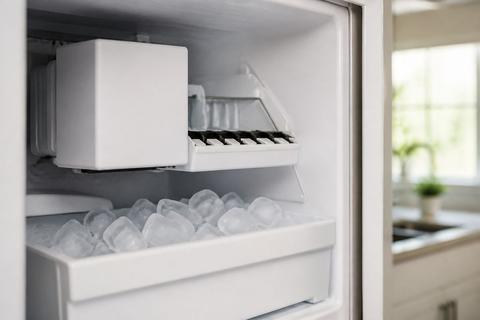
GE Ice Maker Defrost and Freeze-Up Fixes
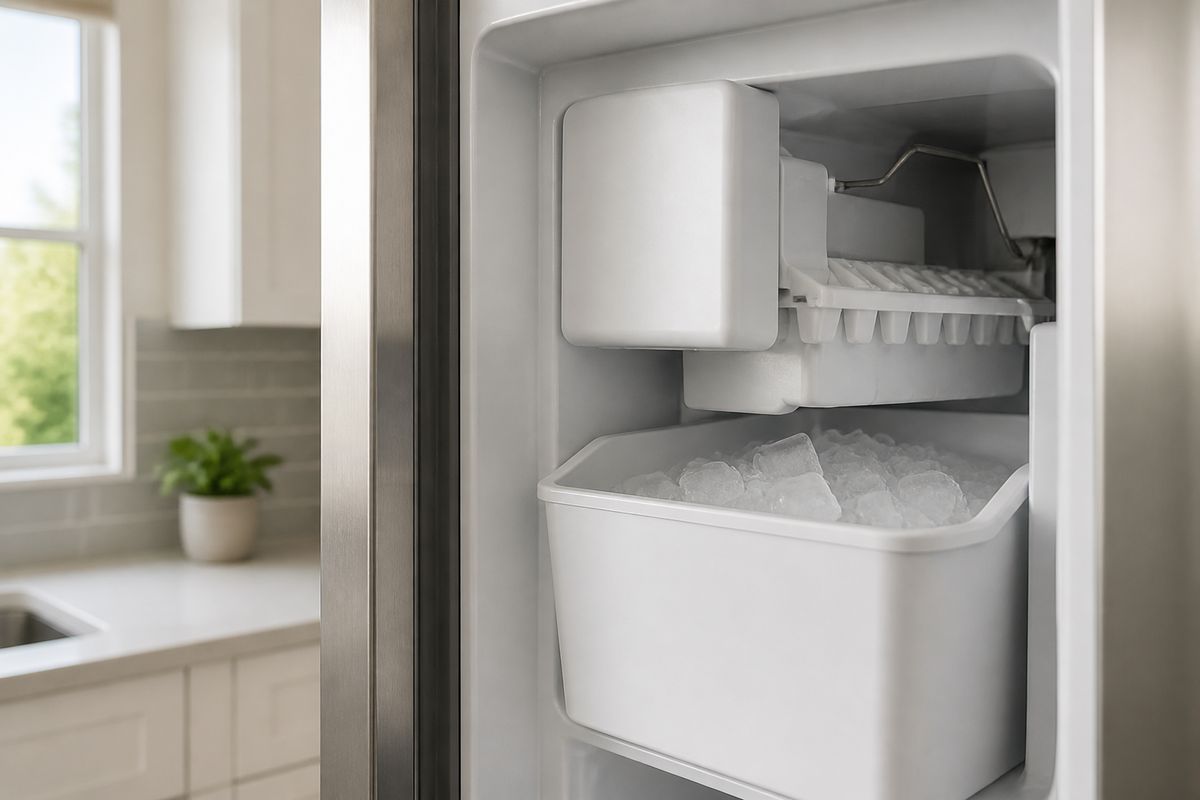
If your GE ice maker has stopped producing ice because the water path is frozen, you need the right GE Ice Maker Defrost and Freeze-Up Fixes—fast. When ice blocks the line, the ice maker can appear “dead,” yet the refrigerator still runs. If you act too aggressively without addressing the cause, the freeze-up can come back quickly.
Force Defrost a GE Refrigerator to Unfreeze Ice Maker Lines
A forced defrost can restore flow when the ice maker’s water supply is blocked by ice in the line, inlet area, or mold region. Use it when you see clear freeze-up symptoms (no ice for hours to days, watery/slow fill, or a frozen water hose behind the rear panel) and normal chilling hasn’t cleared the blockage. After thawing, prevent repeat freeze-ups by correcting airflow and water flow issues that let moisture accumulate where it shouldn’t.
- Open the refrigerator compartment and locate the ice maker and water supply area behind the rear panel (you’ll typically access the line through the back interior panel).
- Initiate a GE forced defrost using the refrigerator’s service mode/defrost control sequence for your model (check the control panel for “forced defrost” instructions, then start it).
- Watch the water path for thawing: when the line area unthaws, you should see relief in ice formation and the ice maker can begin its harvest cycle.
- Reset the ice maker fill condition: on most GE ice makers with a wire bail/feeler arm, make sure it is not stuck up by food items; lower it to resume ice production.
- Address the cause after thawing: confirm the freezer is set to 0 to 5°F, then inspect the inlet water line for kinks and confirm water filter condition (clogged filters restrict flow and can worsen freeze conditions).
GE modular ice maker forced defrost and line thaw steps
If your GE uses a modular ice maker behind the freezer wall, a forced defrost is most effective when the blockage is in the supply area rather than a fully failed component.
- Set the freezer temperature to 0°F and keep the door closed during thaw so the ice path clears properly.
- Start forced defrost from the refrigerator’s control/service mode for your model, then allow the unit to complete the cycle.
- Access the rear cover carefully and look for frost/ice around the water line connection and inlet area; thawed lines should show reduced frost and normal moisture behavior.
- Check the ice maker’s operating state: if your unit has a status LED or power switch on the ice maker cover, confirm it’s set to ON and that the module is in an ice-capable state.
- After the cycle, run one harvest (the system will normally initiate it) and observe that water fills the mold rather than freezing in place.
Full Guide: Force Defrost a GE Refrigerator to Unfreeze Ice Maker Lines
GE Ice Maker Keeps Defrosting: Fix Causes and Settings
If the ice maker seems to “keep defrosting,” the root issue is rarely the ice maker itself. The behavior usually comes from a control strategy responding to abnormal temperatures, sensor feedback, restricted airflow, or water/ice buildup that triggers additional thaw phases. The key is to identify whether the refrigerator/freezer conditions are drifting out of range, airflow is blocked, or the ice maker is cycling when it shouldn’t.
- Confirm freezer temperature is 0–5°F. If the freezer is too warm, frost and ice can form inconsistently, forcing extra defrost behavior.
- Check for airflow obstruction: ensure vents aren’t blocked by food or ice, and verify the rear fan area has clear circulation space.
- Inspect water fill behavior: if water fills slowly or intermittently, it can freeze where it shouldn’t and create a pattern of buildup and thawing.
- Review ice maker mode/settings: on models with an ice maker switch or control selection, confirm it’s set to ice production, not a “dispenser/eco/lock” state that interrupts cycles.
- Use the child article for model-specific checks so you can adjust the exact temperatures, control settings, and sensor-related troubleshooting tied to your GE ice maker design.
Ice maker cycling incorrectly: temperature, airflow, and control behavior
When the ice maker keeps entering a defrost/extended thaw pattern, narrow it down by ruling out the most common triggers.
- Stabilize temperatures by setting the freezer to 0°F and avoiding frequent door openings during troubleshooting.
- Clear vents and maintain spacing around the freezer back wall so air reaches the ice maker area.
- Confirm water delivery meets the cycle: if the line is restricted (especially from a clogged filter), water may freeze in transition and force additional thaw.
- Look for excessive frost around the ice maker region after cycles; heavy frost points to airflow problems or abnormal cooling performance.
- Follow the dedicated fixes checks for your exact GE ice maker type so you don’t chase the wrong component (control, fan, inlet water, or ice mold buildup).
Full Guide: GE Ice Maker Keeps Defrosting: Fix Causes and Settings
GE Ice Maker Noise: Squeaking, Squealing, and Buzzing Fixes
Unusual noises from a GE ice maker are a strong clue that a mechanical or water-related component is struggling. Buzzing can indicate a valve or motor attempting to actuate under resistance; squealing or squeaking can point to a worn drive/gear contact, a misaligned mechanism, or ice binding that affects harvest and release. Because freeze-ups and ice binding can contribute to both noise and stopped production, identifying the noise type helps you choose the correct fix path.
- Identify the noise pattern (when it happens): during fill, during harvest, or continuously.
- Check for ice binding: if ice is stuck in the mold or around the mechanism, thaw-related issues can cause harvest to strain and produce squeals.
- Inspect the ice maker’s alignment and free movement: make sure the ice bucket/ice shield isn’t obstructing the mold area and that the feeler arm/bail is not held in a stop position.
- Listen for valve-related buzzing during water fill; if buzzing occurs without water flow, suspect water restriction or a failing inlet valve.
- Use the child article for step-by-step repairs tied to your noise type (squeaking/squealing vs. buzzing) and your specific ice maker configuration.
Noise-linked freeze-up symptoms (what to look for)
Noisy operation often pairs with freeze-up conditions—especially when ice forms where water should flow freely.
- During buzzing or squealing, check whether water is actually filling the mold; no-fill with repeated buzzing points to water flow or valve problems.
- After a freeze-up event, inspect for frost buildup on the inlet water area or around the rear freezer panel.
- Confirm the ice maker stop mechanism is not stuck: lower the wire bail/feeler arm if it’s raised by ice, residue, or food stored too close.
- If ice is clumping, remove obstructions and ensure the harvest path can cycle without resistance.
- Match the fix to the sound using the dedicated troubleshooting article so you repair the correct system causing the noise.
Full Guide: GE Ice Maker Noise: Squeaking, Squealing, and Buzzing Fixes
Frequently Asked Questions
Why does my GE ice maker freeze up instead of making ice?
Freeze-ups happen when water or moisture is blocked or trapped and turns into ice where it should not. The most common causes are restricted airflow, a stuck water valve, low water flow, or temperature settings that allow excess moisture to build into ice at the line, mold area, or inlet path. If you have a partial freeze-up, you may see intermittent fills but no consistent ice production because water freezes during transitions. The right fix depends on where the blockage is: in the supply line, around the mold/harvest area, or tied to control behavior responding to abnormal temperatures.
When should I force defrost a GE refrigerator?
Force defrost is most useful when the ice maker and/or water line is clearly frozen and basic checks haven’t restored normal flow. Choose forced defrost when you have symptoms like no ice production after a suspected freeze-up, visible frost/ice near the inlet or behind the rear panel, or slow/incomplete water filling that doesn’t improve after stabilizing freezer temperature. Use it carefully because forced defrost is a thawing action, not a root-cause solution. After the thaw, correct the underlying temperature, airflow, and water delivery issues so the same freeze-up doesn’t return within days.
Can ice maker noise be related to freeze-up problems?
Yes. Buzzing, squealing, or squeaking can indicate a component is struggling under resistance caused by ice binding, a restricted water path, or misalignment in the harvest/release mechanism. For example, if water fill is impaired by ice in the line, the ice maker may repeatedly attempt a cycle and produce repetitive buzzing while it cannot complete normal mold filling. Ice that builds around the mold or release components can also cause mechanical strain during harvest, which often sounds like squealing or squeaking. If you hear unusual noise and also notice reduced or clumped ice output, treat it as part of a freeze-up pattern and address the conditions enabling ice formation.